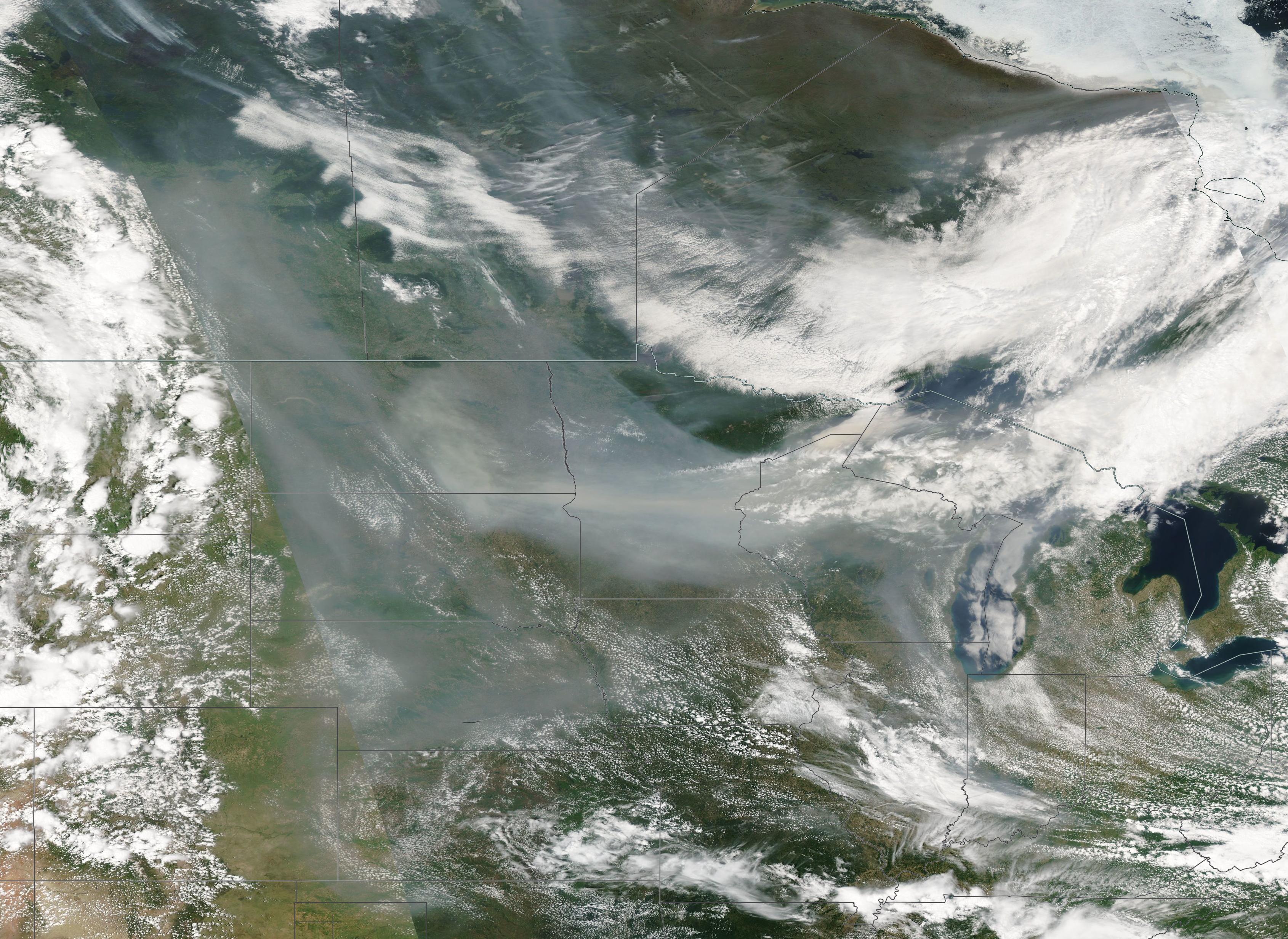
Marin County Public Health issued a formal advisory Friday, July 31, warning that wildfire smoke from the Woodside Fire is degrading air quality across the county and urging vulnerable residents to take specific protective steps.
The advisory applies to all Marin County communities, including Mill Valley, Corte Madera, Larkspur, and Tiburon. Inland temperatures along the Highway 101 corridor were forecast in the upper 80s to lower 90s through Monday, August 3, conditions that can trap smoke near the surface and worsen exposure for Southern Marin residents spending time outdoors.
The county's advisory goes beyond the Bay Area Air Quality Management District's Spare the Air alert, laying out clinical thresholds for when residents should seek medical care and detailing which masks actually work against fine particulate matter.
Who's most at risk
The county identified six groups facing elevated danger: children and older adults; pregnant people; those with asthma, COPD, or other respiratory conditions; people with heart disease or chronic medical conditions; outdoor workers; and people who are unhoused or lack access to clean indoor air.
When to call a doctor and when to call 911
Residents should contact a healthcare provider if symptoms including persistent shortness of breath, wheezing, chest tightness, palpitations, unusual fatigue, nausea, or lightheadedness do not improve after moving indoors or to cleaner air.
Call 911 for severe difficulty breathing, chest pain, loss of consciousness, or confusion.
Cloth masks won't cut it
Marin County Public Health stated that cloth masks, bandanas, and loose-fitting surgical masks do not provide reliable protection from fine smoke particles. Only a well-fitting N95, KN95, or similar particulate respirator offers meaningful protection when outdoor exposure is unavoidable. Respirators should not be placed on children younger than 2, and children should use only respirators that fit properly.
Protecting indoor air
The advisory instructs residents to keep windows and doors closed when smoke is present, run air conditioning on recirculation mode so outdoor air is not drawn inside, and use a portable HEPA air cleaner in the room where they spend the most time. Residents should avoid smoking, burning candles or incense, frying food, and vacuuming without a HEPA-filtered vacuum.
Anyone who cannot keep indoor air clean should consider temporarily relocating.
Conditions driving the smoke
The Woodside Fire ignited Thursday, July 30, near Highway 1 in the Timber Cove area of Sonoma County, burning approximately 152 acres of thick coastal forest. By Sunday, August 2, the fire reached 50% containment, and Cal Fire reported that after inspecting 22 structures, four structures, including two homes, were destroyed and three structures, including two more homes, were damaged. The Sonoma County Sheriff's Office lifted all evacuation orders and warnings by 6 p.m. Friday, July 31, though some roads near the fire remained closed. More than 50 Marin County Fire Department personnel were assigned to the blaze along with five engines, a helicopter, and a bulldozer, according to department spokesperson Mari Ochoa.
Still, air quality remained poor. The air quality index hit 155 in rural northwest Marin and topped 100 in western Marin and Novato on Friday, the Marin Independent Journal reported. The Bay Area Air District predicted readings above 151 on Saturday, August 1, in Novato, San Rafael, and Ross Valley, with more moderate conditions expected Sunday, August 2. No station-specific readings for Mill Valley or Tiburon were reported.
National Weather Service meteorologist Dial Hoang told the Independent Journal on July 31 that "wind speeds could reach 25 to 30 mph in the afternoons and evenings along the coast during the weekend," conditions that could keep pushing smoke across the region.
For healthcare providers and facilities
The advisory directs healthcare facilities, residential care facilities, schools, and employers to review indoor air filtration plans, limit strenuous outdoor activities, and confirm that emergency plans address power outages affecting air conditioning, filtration systems, oxygen equipment, or other powered medical devices.
Patients with asthma or lung disease should follow their respiratory action plan, continue controller medications, and keep quick-relief medication available. Those with cardiovascular disease should reduce exertion and seek medical advice for new or worsening symptoms.
Residents can check real-time air quality at AirNow's fire and smoke map, county guidance at ReadyMarin, and local emergency updates at Marin County's emergency portal.