Mill Valley property owners can split the cost of sidewalk and tree repairs with the city, after the City Council voted unanimously Tuesday, Aug. 18, to approve a pilot program backed by a $99,000 fund.
The Sidewalk Repair Cost Share Pilot Program covers 50% of repair costs up to $1,000 per property annually for sidewalk work and up to $3,000 for residential tree work tied to sidewalk uplift. Commercial properties are capped at $1,500 for tree repairs.
The vote passed on a voice vote with no dissent, following about 30 minutes of presentation and council questions, according to the Mill Valley Briefing.
City Manager Todd Cusimano told the council that sidewalk defects rank fourth among the city's liability claims by incident count but second by dollar value, at an estimated $6 million. Only tree and branch falls cost more, at $16 million. Cusimano said many residents don't realize they are already responsible under state law and city code for maintaining the sidewalk fronting their property.
It took more than seven years. The idea was first pitched to the council in January 2019.
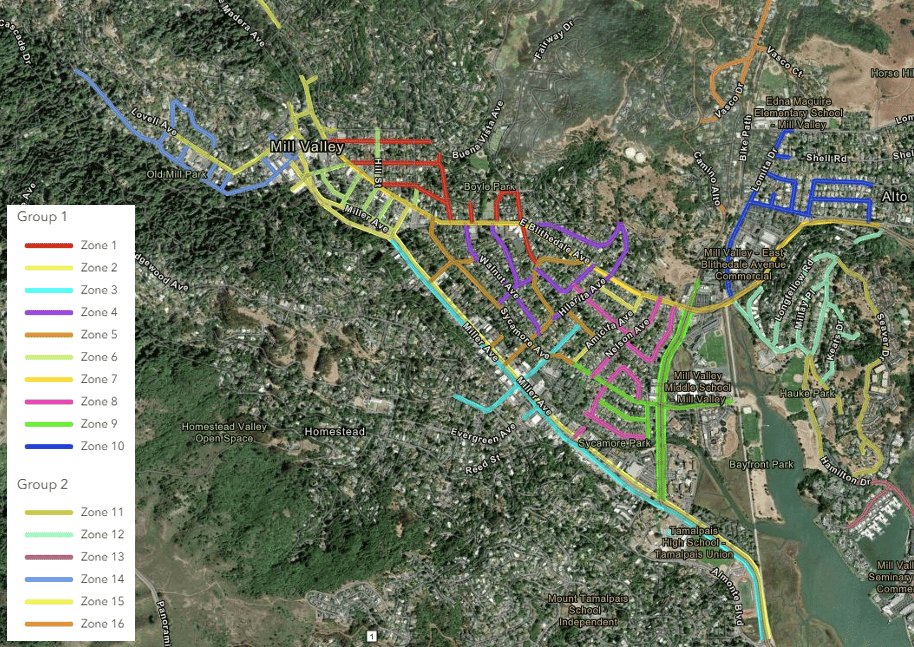
The program divides Mill Valley into 16 zones, with one or two surveyed each year on a rotating basis. Repairs can be flagged through the annual zone survey, a citizen complaint or a property owner applying on their own.
Mayor Max Perrey voted yes but raised concerns about who would actually benefit from the limited pool of money.
"I don't love incentive programs where you put a very fixed amount and it's first come, first served, because who's going to actually access that is people who tune into Council meetings or read MVConnect," Perrey said, referring to the city's email newsletter. "Those aren't necessarily the folks you're actually trying to incentivize who aren't plugged in, who need to learn."
Separately, the city is pursuing broader municipal code changes that would make property owners directly liable for injuries on sidewalks in front of their homes and allow the city to bill owners the full cost of repairs, including staff time and legal fees, if they fail to act. Unpaid bills would become a lien on the property, according to a city notice. Those code changes are scheduled for a Planning Commission hearing in winter 2026-27, followed by a City Council hearing in early 2027.
The city has not announced when the cost-share program will begin accepting applications.