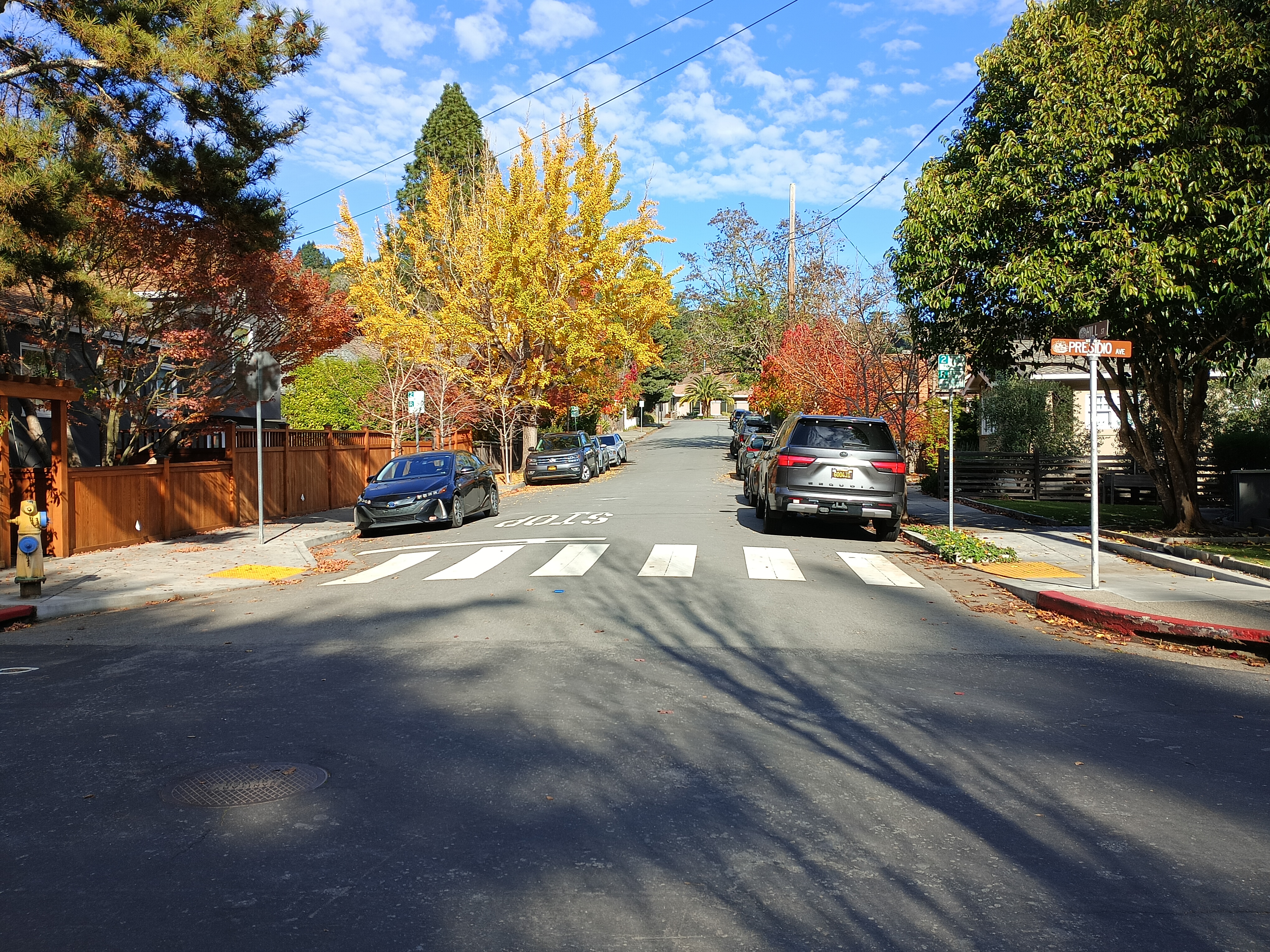
Mill Valley property owners will vote Nov. 3 on whether to extend a $303-per-parcel tax that funds street repaving and wildfire prevention for another 10 years.
Measure T would renew the city's municipal services tax (MST), which generates about $1.9 million a year and expires at the end of fiscal year 2026–27. The Marin County elections office received no ballot argument against the measure, the Marin Independent Journal reported. All five council members are publicly backing renewal. The tax requires two-thirds voter approval to pass.
The MST funds street maintenance, vegetation management, tree maintenance, storm drainage and wildfire risk reduction. It cannot be used for general government purposes, according to the city's MST page.
"Renewing this revenue source will maintain that funding for another 10 years, providing approximately $1.9 million annually for street maintenance and wildfire risk reduction," Mayor Max Perrey said. "Without renewal, that dedicated revenue source would expire."
Voters have approved the parcel tax four times since 1987. City Manager Todd Cusimano said it passed in 2016 with 77% support. The rate started at $266 per single-family home that year and has climbed to $303 through a built-in 2% annual adjustment. That inflator would continue under Measure T.
Low-income seniors aged 65 or older who live in owner-occupied single-family homes and meet household income limits are exempt from the tax.
On June 15, the Mill Valley City Council voted unanimously to adopt Resolution No. 26-48, an early procedural step toward placing the measure on the ballot.
What the money pays for
Mill Valley maintains 60 miles of paved roads, according to Cusimano. The city's pavement condition index (PCI), a standard measure of road quality, stood at 79 as of May 2026. That is up from 73 when the previous five-year paving plan launched in 2018.
A scenario analysis by Pavement Engineering Inc. found that without MST renewal, the deferred-road-work backlog would grow 85% over five years, according to the Mill Valley Briefing newsletter. The backlog would jump from $10.2 million to $18.9 million, and the PCI would slip from 79 to 77.
The tax also supports wildfire preparedness. Councilmember Katherine Jones said the MST funds chipper programs across more than 100 streets citywide.
The Greater Mill Valley Shaded Fuel Break project, which began in 2025, had completed more than 35% of its work with about $1.16 million invested from Measure C and MST funding as of late July. Interim Fire Chief Tom Welch credited that fuel break work with slowing the spread of the July 27 Hillside Fire in an open letter to the community two days later.