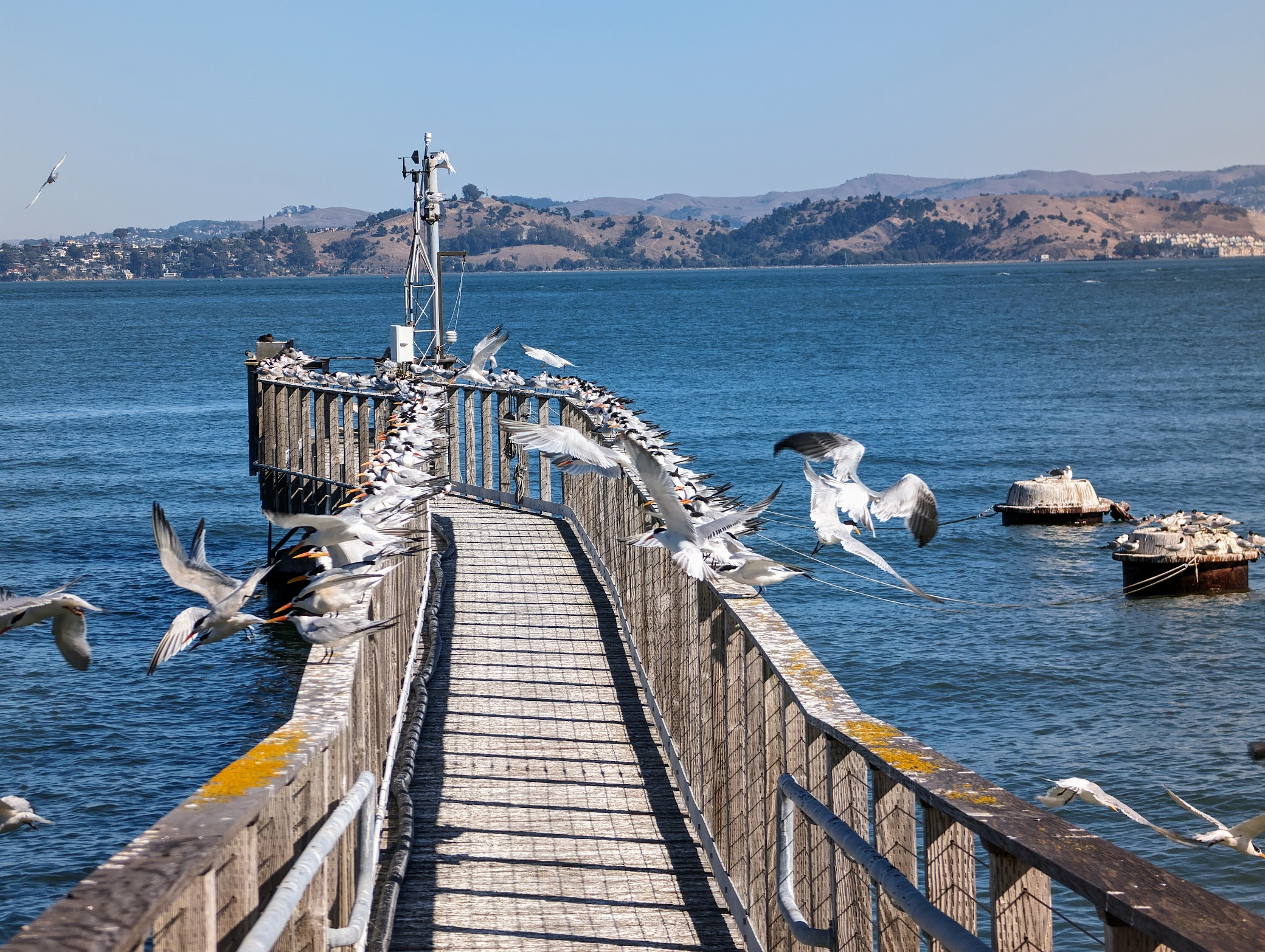
The only marine research center on San Francisco Bay will shut its doors Sept. 30, ending a four-year fight to save San Francisco State University's Romberg Tiburon Campus and the Estuary & Ocean Science Center it houses.
The 53-acre campus on Paradise Drive, which has conducted marine and environmental research since 1978, will cease operations after the university confirmed it could not sustain the facility despite a community fundraising campaign that raised $3.2 million and briefly delayed the closure, The Ark reported.
No other university operates a marine science laboratory on the bay.
The closure affects 17 tenured and adjunct faculty, 11 research assistants and roughly 40 graduate students who use the center's labs for field research. It also displaces the Smithsonian Environmental Research Center West's Marine Invasions Lab and the San Francisco Bay National Estuarine Research Reserve, both of which must find new homes.
A fight that came close
The struggle began in early 2022, when SF State first announced it could no longer support the Tiburon facility. An advisory committee formed and submitted a plan to the California State University chancellor's office outlining a path to self-sufficiency within five years.
Interim executive director Katharyn Boyer lined up $5.8 million in grants from the National Oceanic and Atmospheric Administration to build an aquatic research training facility, along with funding from the California Coastal Conservancy. But in February 2025, SF State President Lynn Mahoney announced the university would begin phasing out operations, citing high maintenance costs and $25 million in needed budget cuts driven by declining enrollment and an 8% state funding cut to the CSU system, the university said.
"We've been working so hard and we've come so close to covering our costs, and it's not enough," Boyer told The Ark in February 2025, when the initial closure was announced. "It just makes me sick."
Boyer said in February 2025 that the center was still $500,000 to $600,000 short of covering its annual costs and needed $1 million per year to maintain the campus. Closing it saves SF State about $800,000 annually, though she noted relocation costs could match or exceed that figure.
A fundraising campaign raised $3.2 million after the February 2025 announcement, delaying the closure. That reprieve proved temporary.
What Tiburon loses
Senior research associate Toni Ignoffo, who spent 20 years studying and working at the center, said in February 2025 that her research on the endangered longfin smelt cannot move to the main campus. "They don't even have a seawater system," she told The Ark. "There's no place for us there."
The center's research agenda includes studying sea level rise through native oyster restoration, ocean acidification, harmful algal blooms and whether sea otters can safely be reintroduced to the bay. Its annual Discovery Day open house drew more than 500 visitors.
The Smithsonian's Andrew Chang, whose Marine Invasions Lab is based at the Tiburon campus, said in February 2025 that it would be "very, very difficult to match the opportunities and benefits provided by the central location."
The site carries more than a century of waterfront history. It served as a Coast Miwok village, a U.S. Navy coaling station, California's first nautical training school and the Naval Net Depot during World War II. In 1933, John A. Roebling's Sons Co. leased it to manufacture cables for the Golden Gate Bridge. SF State acquired the land from the federal government for $1 in 1978, with the condition it be used for education.
What happens to the property after Sept. 30 remains unresolved. Boyer said in February 2025 that a sale to developers might be possible if the terms of the original $1 federal transfer can be renegotiated. The university has not publicly addressed the property's future.
Key date: Sept. 30 — Romberg Tiburon Campus ceases operations. No public farewell event has been announced